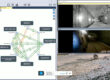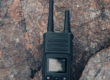

Reliable communications have always been fundamental to specialised operations. Whether coordinating a police tactical unit moving through urban environments, supporting military teams in rapidly changing situations, or enabling Search & Rescue teams operating in remote locations, communications can often determine the success of an operation.
Traditional communications systems frequently rely on fixed infrastructure, repeaters, or a central point of failure. However, specialised units increasingly operate in environments where infrastructure may be unavailable, damaged, overloaded, or simply impractical. This is one of the key reasons mesh networking technology is becoming increasingly popular across police, military, and Search & Rescue (SAR) sectors.
Zero Infrastructure: Dynamic Self-Forming and Self-Healing
In high-stakes environments, operators do not have the time to configure networks or set up portable cell towers.
- Self-Forming: The moment Mesh IP radios are powered on, they automatically detect one another and instantly build a localised, secure network. No central master control or baseline infrastructure is required.
-
Self-Healing: In fluid tactical situations, team members move constantly. If an operator steps out of range or a radio is damaged, the network doesn’t drop. It instantly and autonomously reroutes data through the remaining active radios.
The Tactical Advantage: Communications remain seamless and uninterrupted, allowing operators to focus on the mission rather than troubleshooting their gear.
Conquering the Underground: Buildings, Basements, and Tunnels
Traditional radio waves bounce off concrete, steel, and rock, creating “dead zones” that leave teams blind. Mesh IP radios use advanced COFDM (Coded Orthogonal Frequency Division Multiplexing. It is a highly robust digital modulation and error-correction technology used for wideband data and video transmission) technology to turn these environmental obstacles into pathways.
Instead of trying to punch a single signal through a massive wall, a mesh network thrives in enclosed spaces:
-
Daisy-Chaining: A team moving down a deep tunnel or into a high-rise basement can drop small, lightweight mesh relay nodes along their path when needed.
-
Signal Bounding: The data hops from radio to radio, essentially “bending” around corners and flowing deeper into subterranean or dense urban environments.
| Environment | Traditional Radio Performance | Mesh IP Radio Performance |
| Open Terrain | Excellent | Excellent |
| Urban / High-Rise | Poor | Excellent |
| Tunnels / Basements | Fails completely | Excellent |