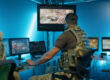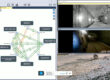

For decades, radio communications were primarily about voice. Push-to-talk allowed teams to stay connected, but modern operations demand much more. Today’s police officers, military personnel, search and rescue teams, and critical infrastructure operators require real-time access to voice, video, location data, mapping, and internet-enabled applications, all while operating in environments where conventional communications may be unavailable. Mesh IP radios transform a radio from a simple communications device into a complete networking platform.
More Than Voice Communications
At their core, mesh radios provide reliable push-to-talk communications without relying on towers, repeaters, or fixed infrastructure. Each radio becomes part of the network, automatically forwarding traffic and extending coverage.
However, voice is only the beginning.
Modern mesh networks can support:
- Live body-worn camera video
- Drone and unmanned vehicle feeds
- ATAK and situational awareness applications
- Personnel and asset tracking
- Sensor data transmission
- Smartphone, tablet, and laptop connectivity
- Cellular and satellite backhaul for internet access
This allows organisations to deploy a complete communications and data network wherever their teams operate.
Public Safety and Emergency Services
Police, fire, and emergency medical teams often work in challenging environments where communications are critical.
Mesh radios provide:
- Reliable communications inside buildings
- Coverage in underground transport systems and tunnels
- Real-time bodycam streaming to command centres
- Team tracking and coordination
- Rapid deployment during major incidents
Unlike traditional systems, coverage can expand naturally as additional personnel arrive on scene.
Search and Rescue
Search and rescue operations frequently take place in remote terrain where cellular coverage is limited or unavailable.
Mesh networks allow teams to:
- Maintain communications across large search areas
- Stream drone video back to coordinators
- Share mapping and location information
- Connect remote teams without infrastructure
- Extend coverage into valleys, forests, mountains, and disaster zones
This creates a resilient communications platform exactly where it is needed most.
Defence and Specialised Units
Military and specialist law enforcement teams increasingly require more than voice communications.
Mesh radios can support:
- ATAK integration
- GPS-denied personnel tracking
- Live video distribution
- Sensor integration
- Unmanned systems and robotics
- Satellite connectivity for beyond-line-of-sight operations
The result is a shared operational picture that improves situational awareness and decision-making.
Critical Infrastructure and Industry
Mesh technology is equally valuable outside the tactical environment.
Applications include:
- Rail networks and maintenance tunnels
- Ports and maritime facilities
- Warehouses and logistics centres
- Mining operations
- Utility and energy infrastructure
- Construction and engineering projects
In these environments, mesh networks provide a private, secure communications system without the need for expensive fixed infrastructure.
Extending Beyond the Mesh
One of the most powerful features of modern mesh radios is the ability to bridge local networks to cellular and satellite services.
A team operating deep inside a tunnel, remote forest, industrial facility, or disaster zone can maintain local communications while selected nodes provide connectivity back to headquarters, command centres, or remote decision-makers.
This creates a seamless communications architecture that combines local resilience with global reach.
One Device. Unlimited Possibilities.
The role of the radio has evolved. It is no longer simply a voice device—it is now the foundation of a mobile communications ecosystem.
Whether supporting a police operation, coordinating a rescue mission, managing a warehouse, securing a port, or connecting teams in remote locations, mesh IP radios provide the voice, video, data, and situational awareness needed to operate effectively.